
EAL or Learning Difficulty? How a Psychoeducational Assessment Tells the Difference
A child in an international school is two years into English-medium instruction. They chat happily at break, follow classroom routines, and seem socially settled. But their writing is thin, their reading lags, and they avoid tasks that involve text. Is this still English catching up, or is something else going on?
This is the most common, and the most consequential, question in international school inclusion. Get it wrong in one direction and a capable bilingual child is labelled with a difficulty they do not have. Get it wrong in the other and a child with genuine dyslexia, a language disorder, or ADHD is left for years on the assumption that their English will fix everything.
There is a single principle that resolves most of it: a learning difficulty shows up in every language a child uses and on tasks that do not depend much on vocabulary, whereas an English-language gap shows up only in English and narrows with good teaching and time. Everything below is the detail behind that principle, written so a parent can follow it and a SENCO can rely on it.
What is the difference between EAL and a learning difficulty?
English as an Additional Language describes a stage, not a deficit. A learning difficulty is a persistent processing difference that exists regardless of which language the child is using.
EAL is the ordinary, expected condition of a child acquiring the language of instruction alongside, or after, a home language. It is a developmental trajectory. A specific learning difficulty (SpLD) such as dyslexia, a developmental language disorder (DLD), ADHD, or autism is a neurodevelopmental difference in how a child processes information. The first is about exposure and time. The second is about underlying cognition.
The two are independent of each other. A bilingual child is no more likely to have a learning difficulty than a monolingual child, and no less likely either.
The base rate is roughly the same in both populations, which means that in any international school cohort a predictable minority of EAL learners will also have a genuine SpLD. They are not rare. They are simply harder to see, because two things are happening at once and one is masking the other.
This is also why the two are not mutually exclusive, and why the question is never purely “language or difficulty.” It is sometimes both. A child can be acquiring English and have dyslexia. When that happens, the language demand and the processing difference interact, and progress slows further than either factor alone would predict.
Why are EAL learners so often mistaken for having a learning difficulty?
Because conversational fluency arrives years before academic language, and adults read fluency as proficiency. A child who sounds fluent is assumed to be fully competent in English, so when academic work stalls, the explanation defaults to a difficulty.
The distinction here is between two kinds of language, and it is the single most useful idea for any teacher working with bilingual children. Conversational language, the language of the playground and the lunch queue, is context-rich and cognitively undemanding. It typically develops within one to two years of immersion.
Academic language, the language of textbooks, exam questions, and abstract explanation, is context-poor and cognitively demanding. It typically takes five to seven years to reach the level of a monolingual peer, and longer if there are gaps in prior schooling.
The trap is the gap between the two. At eighteen months a child can sound entirely at home and still be years away from the academic English an international curriculum demands. When their essays come back weak or their comprehension scores sit below the class, the surface fluency makes “they just need more English” sound implausible, and “perhaps there is a difficulty” sounds reasonable. Both can be wrong.
This produces errors in two opposite directions, and a good system has to guard against both:
Yli-identifiointi: Normal second-language features, such as a smaller English vocabulary, slower reading of unfamiliar text, or spelling that reflects another language’s sound system, are read as signs of dyslexia or low ability. The child is referred, and sometimes labelled, for what is ordinary language development.
Under-identification, the “wait to fail” problem: Genuine difficulties are dismissed for years with “it is just their English.” The child’s lack of progress is attributed entirely to language, so no assessment happens, no support is put in place, and the difficulty is caught late, often after confidence and motivation have already eroded.
International schools are exposed to both at once because EAL is not the exception in their classrooms, it is frequently the norm. When most of a year group is working in an additional language, the usual monolingual reference points stop being reliable, and a principled method for telling difference from difficulty becomes part of the school’s core operating need rather than an occasional referral question.
Lorem ipsum dolor sit amet, consectetur adipiscing elit. Ut elit tellus, luctus nec necullullcorper mattis, pulvinar dapibus leo.
What does a genuine learning difficulty look like in a bilingual child?
It shows up in both languages, not just in English. That is the clearest single signal that the issue is cognitive rather than linguistic.
Dyslexia is not a property of English. It is a difference in phonological processing, naming speed, and working memory that affects how a person maps sounds to symbols in any alphabetic or character-based system.
The research across very different language pairs, including Spanish and English, Italian and English, and Chinese and English, points the same way. Children with a genuine difficulty perform below their peers in their first language as well as their second, even when the formal diagnosis was only ever made in the school language.
The difficulty travels with the child across languages because its source is in cognition, not in the particular orthography they happen to be learning.
This is also why strong skills in a home language are reassuring rather than incidental. If a child reads and writes at age-appropriate level in their first language, and the only struggle is in English, the most probable explanation is language development, not a learning difficulty.
If, instead, the same patterns of difficulty appear in both languages, the probability shifts sharply toward a genuine SpLD.
The markers an assessor weighs include:
- A consistent profile across both languages rather than a single isolated weak score in English.
- A family history of literacy difficulties, dyslexia, or language disorder.
- Particular strain on tasks that involve sounds and nonsense words, where vocabulary cannot be used to compensate.
- Naming speed that is slow in a way that matches what teachers see in the classroom, independent of which language is being named in.
- A difficulty that does not resolve, or barely moves, despite a sustained period of good, targeted English-language teaching. Time and provision are themselves diagnostic. Language gaps close with them. Processing differences do not.
There is a mirror-image case that schools miss more often than they realise. A bright bilingual child with strong oral language can mask a real decoding weakness, using context, memory, and inference to get by on familiar text while the underlying reading mechanism never becomes automatic. The fluent talker is the one most likely to be overlooked, which is the opposite of the usual assumption.
Why can a standard English test not answer this on its own?
Because most standardised tests are built and normed on monolingual English speakers, so they measure English exposure and a genuine difficulty at the same time and cannot, by themselves, tell you which is which.
The problem concentrates in the parts of a test that lean on acquired English knowledge. Vocabulary subtests, verbal reasoning, comprehension of complex English passages, these draw heavily on how much English a child has been exposed to. A bilingual child can score low on them for reasons that have nothing to do with ability or with any difficulty. Reading those scores at face value is how over-identification happens.
A competent assessment does not throw these measures away. It reads them in the right light and weights them against measures that are far less sensitive to language exposure. The skill is not in administering a test. It is in knowing which parts of which test mean what for a child who has been learning the language of assessment for two years rather than twelve.
Which assessment measures actually separate language from difficulty?
The ones that depend least on vocabulary and acquired English: naming speed, phonological awareness, working memory, processing speed, non-verbal reasoning, and reading of nonsense words. These are often called language-light or language-fair measures, and they are the diagnostic core for any bilingual child.
A psychoeducational assessment designed for internationally mobile children leans deliberately on these measures and interprets the language-heavy ones with caution. In practical terms, that means drawing the diagnostic weight from instruments and indices such as these:
- Cognitive ability via the WISC-V (for children and young people) or the WAIS (for adults), with particular attention to the fluid reasoning and non-verbal indices, which are far less dependent on English than the verbal comprehension index. A wide gap between strong non-verbal reasoning and weak English-loaded scores often points to language, not ability.
- The CTOPP-2 for phonological awareness and rapid automatised naming (RAN). Phonological processing and naming speed are among the most language-fair predictors of reading difficulty that exist, and they discriminate genuine SpLD from typical second-language development across very different language pairs.
- Nonword reading, which tests the decoding mechanism directly. Because nonsense words have no meaning to look up, a child cannot lean on vocabulary to disguise a weak phonological route, which makes this one of the cleaner windows on dyslexia in a bilingual reader.
- Working memory and processing speed indices, both of which sit at the heart of dyslexia and ADHD and neither of which is primarily a vocabulary measure.
- The MOXO continuous performance test for sustained attention, which captures attention regulation in a way that is largely independent of language proficiency, useful where ADHD is part of the question.
- Attainment measures via the WIAT, read as one input among many rather than as a verdict, precisely because attainment in English is the score most contaminated by exposure.
Press images for a deep dive into the assessments
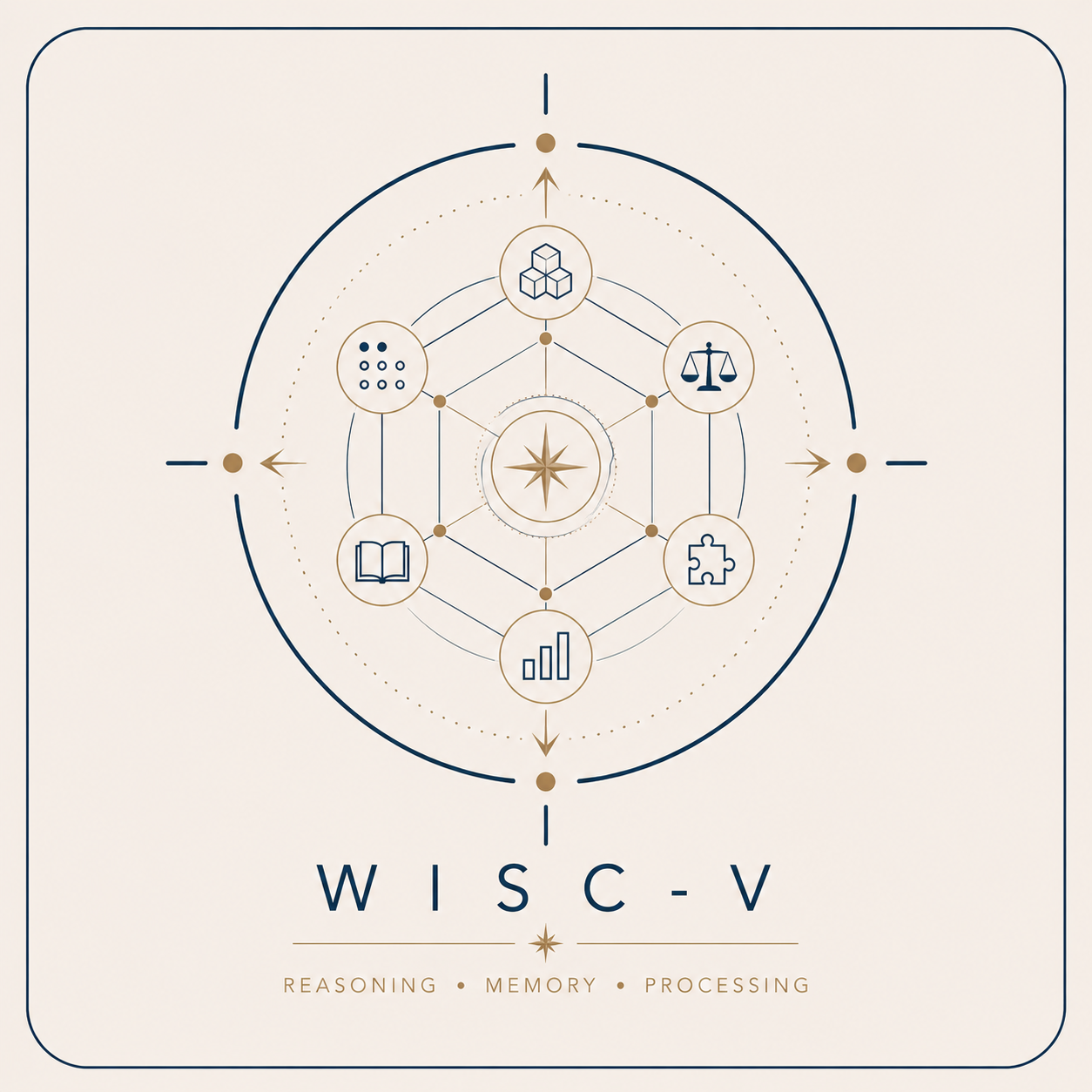
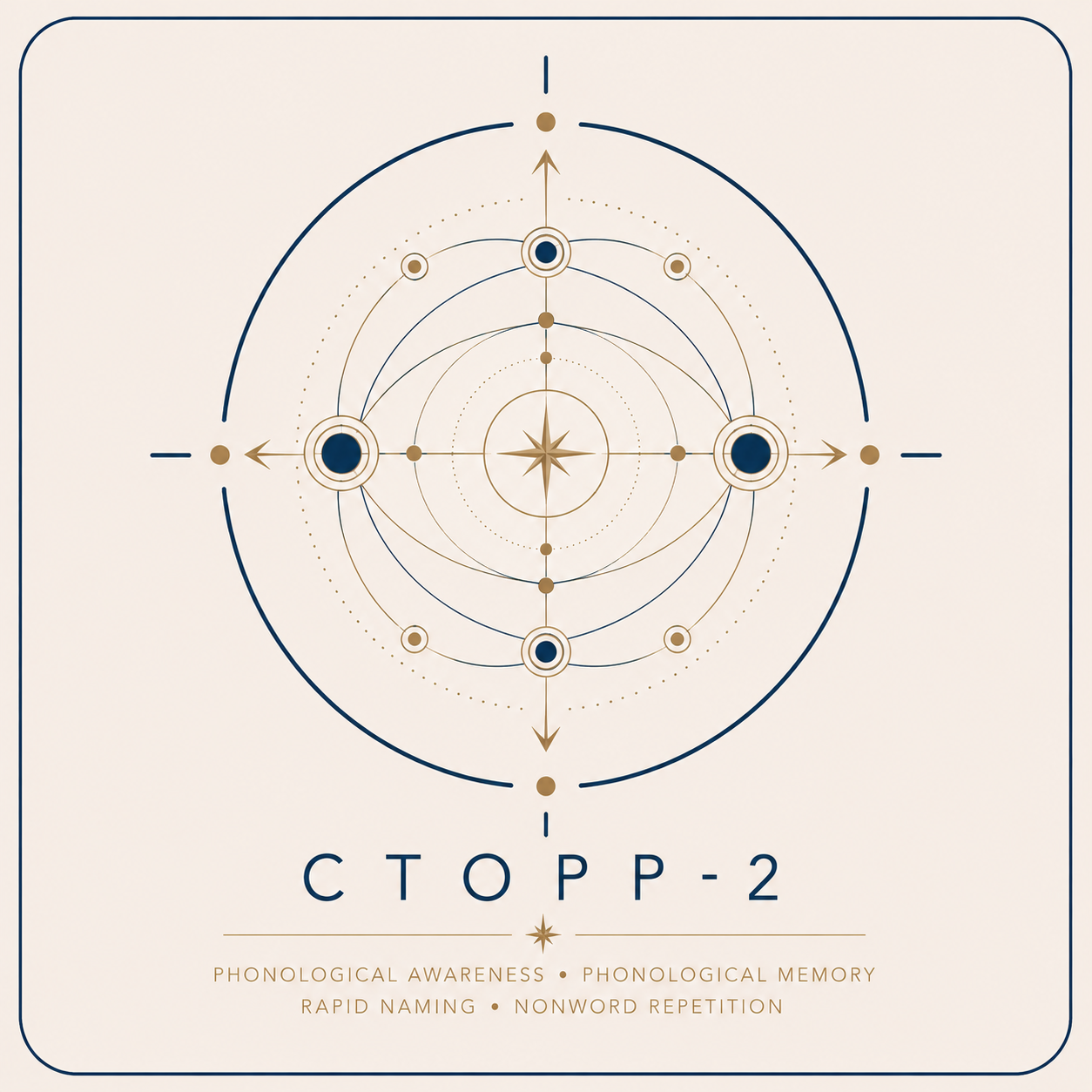
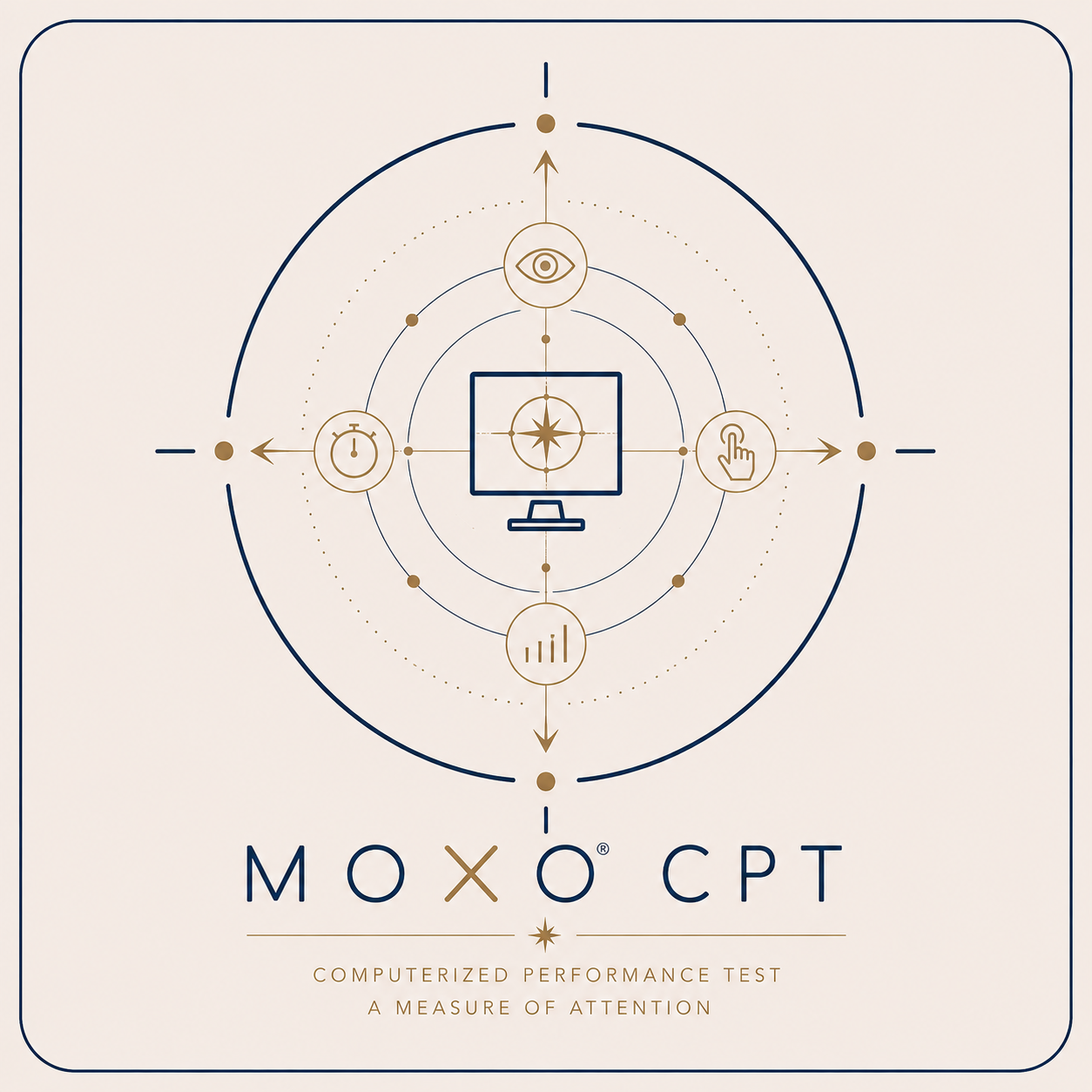
Two further methods matter for bilingual children specifically. The first is gathering information about the first language directly, including, where feasible, evidence of how the child reads, writes, and processes in it.
A child who shows the same difficulty in a language they have spoken since birth is telling you something a single English test never could. The second is attention to the pattern across the whole profile rather than any one number. A genuine difficulty produces a coherent story, the same weaknesses surfacing again and again across both languages and on the language-fair tasks.
A language gap produces an isolated dip in the English-loaded scores while the language-fair measures sit in the normal range.
Diagnosing Learning Difficulties
Regardless of Language
MAAILMANLAAJUINEN KOULUTUKSEN TESTAUS
How much does the students language and developmental history matter?
A great deal. The history often settles the question before the testing confirms it, which is why a thorough intake is part of the assessment rather than paperwork around it.
The questions that carry the most weight are about the shape of the child’s whole linguistic life:
- Which languages are spoken, by whom, and how often.
- The age at which the child was first exposed to each language.
- Where and how literacy was taught in each language, and to what standard.
- The quality and continuity of schooling, including any interruptions, mid-year moves between very different systems, or periods with little formal instruction. Internationally mobile children frequently accumulate these gaps, and a gap can look exactly like a difficulty until you know it is there.
- Early language development in the first language, including any delay in talking, and any family history of literacy or language difficulty.
For the families an international service most often sees, this history is rarely the simple “newly arrived, no English” picture much of the published guidance assumes. These are often children of two or three languages, with a home language that may itself be incompletely developed, who have moved between curricula and countries on a timetable set by their parents’ work. The history is the only way to read their scores correctly, because it tells the assessor what the child has actually had the chance to learn.
Is this only about dyslexia, or does it apply to ADHD, DLD and autism too?
It applies to all of them. The same logic, look across languages and across settings, and lean on the measures least bound to English, holds for attention, spoken language disorder, and autism, each with its own particular confound to manage.
varten ADHD, the question is whether attention and self-regulation difficulties appear consistently across settings and across languages, or only in the high-demand English-academic context where a child might reasonably disengage from work they cannot yet access. Continuous performance testing and structured rating scales completed across home and school help separate genuine attention regulation from the ordinary withdrawal of a child who is lost in the language.
varten kehityskielen häiriö, the difficulty is real and not explained by exposure, which makes it one of the harder distinctions, because typical second-language acquisition and DLD can look similar in English. The resolving evidence is again the first language. A child acquiring English normally has an intact first language. A child with DLD shows the language difficulty in their strongest language too.
varten autismi, the central risk is mistaking the social and communicative features of being new to a language and a culture for the features of autism, or the reverse, missing autism because its presentation is read as cultural or linguistic difference. A structured developmental and diagnostic interview such as the DISCO, conducted by a clinician trained to hold the linguistic and cultural context in view, is built to make that separation carefully rather than from a checklist impression.
What should a school do when it is genuinely unsure?
Put good English-language provision in place, track the response to it over time, and where progress stalls despite that provision, move to formal assessment rather than continuing to attribute everything to language.
The response to good teaching is one of the most informative pieces of evidence a school has, and it costs nothing extra to gather.
A language gap narrows when a child is taught well over time while a genuine difficulty barely moves.
A school that documents provision and monitors progress is already generating the data that distinguishes the two, and is protected against both the premature label and the years-long delay.

The point at which to involve an educational psychologist is when the language-fair signals and the history start pointing the same way: difficulty visible in the first language, a family history, a profile that is not resolving despite sound provision, or a pattern of weakness that turns up on tasks where vocabulary should not matter.
At that stage a formal psychoeducational assessment can do what classroom observation cannot, which is to measure the underlying processing directly and read it correctly for a bilingual child.
Suoritettuaan kattavan dyskalkuliaarvioinnin opetuspsykologimme kanssa, vanhemmat saavat perusteellisen raportin, jossa kerrotaan heidän lapsensa matemaattiset vahvuudet ja haasteet.
Raportti kattaa kaikki matemaattisiin tehtäviin liittyvät osa-alueet, kuten lukuaistin, matematiikan sujuvuuden, ongelmanratkaisutaidot ja kognitiiviset prosessointikyvyt. Tavoitteena on antaa selkeä diagnoosi ja antaa erityisiä suosituksia kohdistetuille toimenpiteille.
Sen lisäksi, että raportti käsittelee dyskalkuliaa, se voi tutkia muita samanaikaisesti esiintyviä sairauksia, kuten ADHD tai lukihäiriö, jotka voivat usein liittyä matematiikan vaikeuksiin.
Kun diagnoosi on tehty, luodaan yksilöllinen oppimissuunnitelma (ILP). Tämä henkilökohtainen suunnitelma sisältää erityisiä majoitusvaihtoehtoja, kuten lisäaikaa matematiikan kokeiden aikana, pääsyn laskimiin tai yksilöllistä opetusta, joka on räätälöity heidän yksilöllisiin tarpeisiinsa.
Toisin kuin perusluokkahuoneissa, ILP on kehitetty tiiviissä yhteistyössä koulutuspsykologien, opettajien ja vanhempien kanssa, mikä varmistaa täysin räätälöidyn suunnitelman. Nämä majoitukset, kuten lisäaikaa kokeisiin, ovat tärkeitä auttaessaan lapsia hallitsemaan kokeiden suorittamistahtia ja vähentämään ahdistusta.
ILP tarkistetaan ja päivitetään säännöllisesti lapsen edistymisen perusteella.
What do schools and families receive from a formal assessment?
A diagnostic report that states clearly whether the picture is language, a learning difficulty, or both, and that translates any finding into the specific support and exam access arrangements the child needs.
A psychoeducational assessment carried out by an HCPC-registered educational psychologist produces a report written against DSM-5-TR and ICD-11 criteria, with the full profile across cognitive ability, attainment, and the language-fair processing measures set out and interpreted in light of the child’s language history.
Where a difficulty is identified, the report sets out the classroom support and the formal exam access arrangements that follow from it, in the form the major international boards require, including the IB, Cambridge International, Pearson Edexcel, and College Board. Where the picture is language rather than difficulty, the report says so plainly, which spares a capable bilingual child a label they do not need and gives the school a clear basis for the right kind of provision.
For internationally mobile families, the value is in getting the question answered correctly the first time, by an assessor who understands that a child learning in their second or third language is the ordinary case, not the complication.
Global Education Testing provides psychoeducational assessments for international schools and families, conducted by HCPC-registered psychologists, with diagnostic reports recognised by all the major international examination boards.