
24 maja Može li moje dijete biti smješteno u niži razred prilikom prelaska u drugu međunarodnu školu?
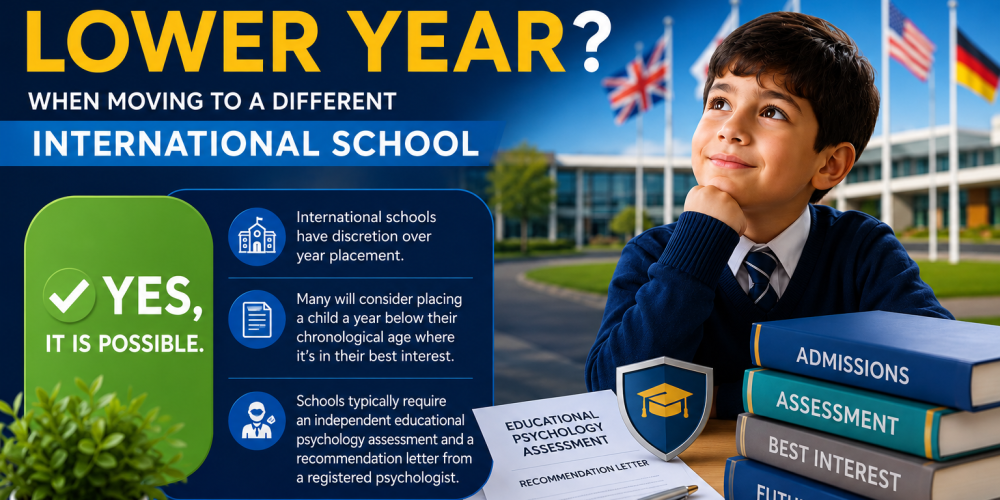
Da, moguće je. Međunarodne škole uglavnom imaju diskreciono pravo u pogledu smještaja u određeni broj godina i mnoge će razmotriti smještaj djeteta godinu dana mlađeg od njegovog hronološkog uzrasta ako postoje dokumentovani dokazi da je smještaj u najboljem interesu djeteta. Dokaz koji škola obično traži je nezavisna procjena obrazovne psihologije s preporukom registrovanog psihologa.
Jedna porodica koja je nedavno kontaktirala Global Education Testing priprema se za preseljenje iz Šangaja u UAE. Njihov sin ima sedam godina, trenutno je u 1. razredu u Šangaju, a obično bi bio smješten u 4. razred u Cambridge sistemu u Dubaiju na osnovu svoje hronološke dobi.
Roditelj je napisao: „On je najmlađi u svom trenutnom razredu i škola mu je predstavljala izazov. Vjerujemo da bi mu koristilo da se pridruži drugom razredu kako bi bolje podržao svoj razvoj.“ Pitali su da li bi nezavisni obrazovni psiholog mogao da ga procijeni i dostavi preporuku kao dokaz za podršku zahtjevu za smještaj.
Ovo je jedno od najčešćih pitanja koje Global Education Testing dobija od međunarodno mobilnih porodica. Isto pitanje dolazi od porodica koje se sele između Madrida i Ženeve, Singapura i Londona, Hong Konga i Chiang Maia, Bangkoka i Rijada. Specifične zemlje i nastavni planovi i programi se razlikuju. Osnovno pitanje se ne razlikuje.
Zašto smještaj u školu postaje pitanje prilikom selidbe
Međunarodne školske godine se ne usklađuju u potpunosti između zemalja i nastavnih planova i programa. Britanski sistem koristi od 1. do 13. razreda počevši od pete godine. Američki sistem koristi od vrtića do 12. razreda počevši od šeste godine. Španski sistem počinje obaveznu osnovnu školu sa šest godina. Kineski sistem počinje 1. razred sa šest ili sedam godina, ovisno o školi. IB program osnovnih godina je grupiran po godinama, ali se različito tumači u različitim zemljama domaćinima.
Kada se porodica seli između sistema, hronološka dob djeteta često ga smješta u razred koji se ne poklapa s njegovim akademskim ili razvojnim stanjem. Nova škola podrazumijeva smještaj prema dobi. Porodica može imati dobre razloge da zatraži drugačiji smještaj. Škola će obično razmotriti zahtjev ako su dokazi tačni.
Tri uobičajena scenarija dovode do pitanja o plasmanu u godinu.
Dijete rođeno ljeti ili najmlađe u razredu. Dijete koje je oduvijek bilo najmlađe u svom razredu, kojem su akademski i društveni zahtjevi bili teški i kojem bi koristila godina s nešto starijim vršnjacima u razredu ispod nje.
Dijete koje je napredovalo. Dijete koje je rano krenulo u školu ili čija ga je prethodna škola ubrzala, ali čiji bi akademski i emocionalni profil odgovarao razredu koji odgovara njegovoj hronološkoj dobi negdje drugdje.
Dijete koje prelazi između nastavnih planova i programa s različitim početnim uzrastom. Dijete čiji je prethodni nastavni plan i program započeo formalno školovanje kasnije ili ranije nego što se očekuje od sistema prijema.
U svakom slučaju, porodica ne traži uslugu od škole. Oni traže od škole da donese odluku o smještaju koja odražava stvarno dijete, a ne datum u pasošu.
Šta je sveobuhvatna psihoedukacijska procjena?
Sveobuhvatna psihoedukacijska procjena je dubinska evaluacija osmišljena da razumije kako dijete uči, misli, postiže akademske rezultate te funkcionira emocionalno i bihevioralno.
Procjena ispituje kognitivne sposobnosti poput rasuđivanja, pamćenja, obrade i rješavanja problema, uz akademske vještine u čitanju, pisanju i matematici. Također istražuje izvršne funkcije, pažnju, emocionalno blagostanje, anksioznost, ponašanje i socijalno-emocionalni razvoj kako bi se stvorila potpuna slika djetetovog profila učenja.
Integriranjem standardiziranog testiranja, mjera ponašanja, zapažanja i kliničke interpretacije, procjena pomaže u utvrđivanju da li su teškoće povezane sa stanjima kao što su disleksija, ADHD, disgrafija, autizam, slabosti izvršnih funkcija, teškoće u brzini obrade, anksioznost ili druge razlike u učenju.
Za učenike međunarodnih škola, procjene također uzimaju u obzir utjecaj višejezičnosti, školskih promjena i međukulturalnog obrazovanja, pomažući u razlikovanju stvarnih poremećaja u učenju od uobičajenih izazova povezanih s međunarodnim obrazovanjem.
Rezultat je detaljno razumijevanje ne samo s čime se dijete bori, već i zašto, što omogućava ciljane preporuke, školske prilagodbe i intervencije koje podržavaju dugoročni akademski napredak, samopouzdanje i dobrobit.
Šta škola prijemnica želi vidjeti
Međunarodne škole se razlikuju u svojim politikama o smještaju u određeni razred, ali dokument koji škola obično traži je nezavisna psihoedukacijska procjena koja uključuje konkretnu preporuku o smještaju u određeni razred.
Procjena pruža timu za prijem i timu za podršku učenju škole tri stvari koje su im potrebne.
Kognitivni profil koji utvrđuje gdje se dijete nalazi u odnosu na drugu djecu iste hronološke dobi i iste predložene dobi za smještaj. WISC-V ili WAIS daje standardne rezultate i percentilne rangove na osnovu verbalnog razumijevanja, vizualnog prostornog rasuđivanja, fluidnog rasuđivanja, radne memorije i brzine obrade. Škola koja prima dijete može tačno vidjeti gdje se kognitivni profil djeteta uklapa.
Akademski profil koji utvrđuje gdje se djetetovo čitanje, pisanje i matematika zapravo nalaze u odnosu na vršnjake odgovarajuće dobi. WIAT-III izdanje daje standardne rezultate u svim akademskim domenima. Dijete koje bi bilo smješteno u 4. razred po dobi, ali čije je akademsko funkcioniranje na nivou 2. razreda, ima objektivne dokaze koji podržavaju niži plasman.
Emocionalni i bihevioralni profil koji obuhvata kako se dijete nosi sa školom. Connersova i SNAP skala za ocjenjivanje, Rotterova skala nepotpunih rečenica za adolescente (za stariju djecu) i kliničko posmatranje zajedno obuhvataju dimenziju blagostanja. Dijete koje ima akademskih problema često ima i emocionalnih problema, a izvještaj obuhvata oboje.
Preporuka je dokument koji škola obično želi priložiti uz izvještaj. Pismo sadrži profesionalno mišljenje psihologa o pitanju smještaja, utemeljeno na nalazima procjene.
Može li se preporuka koristiti kao dokaz
Da. Preporuka obrazovnog psihologa registrovanog od strane HCPC-a ima težinu u britanskim međunarodnim školama širom svijeta i u većini međunarodnih školskih sistema, bez obzira na zemlju domaćina. HCPC je zakonski regulator u Velikoj Britaniji za obrazovne psihologe. Međunarodne škole koje nude britanski nastavni plan i program, IB ili američki nastavni plan i program rutinski prihvataju procjene registrovane od strane HCPC-a kao validan eksterni dokaz.
Za porodice koje se sele u međunarodnu školu u Cambridgeu, procjena također može pomoći u budućim prijavama za upis u Cambridge bez potrebe za ponavljanjem.
Za porodice koje se sele u britansku školu koja vodi Pearson Edexcel, procjena podržava prijave za JCQ aranžmane za pristup kasnije u učenikovom putovanju.
Za porodice koje se sele u školu koja provodi IB program za osnovne škole ili srednje škole, procjena podržava prijave za IB inkluzivne pristupne aranžmane kada učenik dostigne Diploma program.
Za porodice koje se preseljavaju u školu s američkim nastavnim planom i programom, procjena podržava prijave za SAT i AP ispite od strane College Board-a.
Izvještaj je strukturiran tako da zadovolji sve ove sisteme u jednom dokumentu.
Šta ako učenik nije formalno identificiran sa teškoćama u učenju
Procjena smještaja nakon godinu dana ne zahtijeva prethodnu dijagnozu. Procjena nije samo dijagnostička vježba. To je sveobuhvatan profil koji mapira kognitivno, akademsko i emocionalno funkcioniranje djeteta, a na osnovu tog profila psiholog formira preporuku o smještaju.
Ako procjena otkrije razliku u učenju ( disleksija , diskalkulija, disgrafija, ADHD , anksioznost ili profil autističnog spektra), izvještaj to dokumentira, a školski tim za podršku učenju ima dijagnostičku osnovu za planiranje podrške od prvog dana.
Ako procjena ne otkrije osnovnu razliku u učenju, ali potvrdi da dijete funkcionira ispod očekivane hronološke dobi, izvještaj podržava zahtjev za smještaj u razred na razvojnim, a ne dijagnostičkim osnovama.
Oba ishoda podržavaju razgovor porodice sa školom primaocem.
Kako globalno testiranje obrazovanja rješava ovaj zahtjev
Global Education Testing je sarađivao s mnogim međunarodno mobilnim porodicama koje su se snalazile s pitanjima za plasman u razred.
Sveobuhvatnu psihoedukacijsku procjenu putem sigurne video veze provode obrazovni psiholozi registrirani od strane HCPC-a, a cijeli proces traje 21 dan, od početnog upita do dostave pisanog izvještaja i preporuke.
Procjena uključuje kognitivnu bateriju, akademsku bateriju, mjere izvršnih funkcija i pažnje, mjere emocionalnog funkcioniranja i integrirani dijagnostički izvještaj. U slučajevima kada porodica zatraži preporuku za smještaj na godinu dana, psiholog uz izvještaj dostavlja i zasebno pismo preporuke, u kojem navodi stav o smještaju i dokaze koji ga podržavaju.
Izvještaj od 20 do 30 stranica zasnovan je na kriterijima DSM-5-TR i ICD-11, napisan je na engleskom jeziku i strukturiran je tako da zadovolji zahtjeve škole primatelja, bez obzira na zemlju ili nastavni plan i program.
Za porodice koje se sele između zemalja, online model pružanja usluga je praktičniji. Procjena se može obaviti prije selidbe, tokom selidbe ili nakon dolaska na novu lokaciju. Izvještaj i preporuka mogu se direktno poslati školi koja ih prima. Porodica ne mora čekati da se fizički smjesti u novoj zemlji da bi započela proces.
Sljedeći koraci
Porodice koje razmatraju godišnju procjenu smještaja mogu kontaktirati Global Education Testing putem obrasca za preporuke porodice . Pristup je trenutan, a cijeli proces od početka do kraja traje 21 dan.

Alexander Bentley-Sutherland je izvršni direktor Global Education Testing, vodećeg dobavljača Testiranja za razvoj učenja, posebno prilagođenog za međunarodnu i zajednicu privatnih škola širom svijeta.
- Ovaj autor nema više objava.