
Help for Parents

If dyspraxia or related processing differences are confirmed, the psychologist will outline specific strategies for school support. These may include occupational therapy for motor skills, extra time in written assessments, reduced handwriting demands, and targeted teaching methods to strengthen organisation and sequencing....

The power of this assessment lies in its integration. By examining Johanna through multiple lenses (standardized testing, behavioral rating scales, emotional measures, and real-time observations), we can identify patterns that explain her unique learning profile. For instance, it helps us distinguish whether any academic difficulties...

Uncover the subtle signs that your child is struggling in school—from dropping grades and disruptive behavior to hidden anxiety and physical complaints. This feature offers practical, actionable strategies for early intervention, empowering parents to work with teachers and professionals to support academic and emotional growth....

When children enter primary school, the demands of reading, writing, maths, and social interactions can reveal hidden learning difficulties. Struggles with decoding words, focusing in class, following instructions, or making friends might signal challenges like dyslexia, ADHD, autism, or processing disorders. Many of these issues...

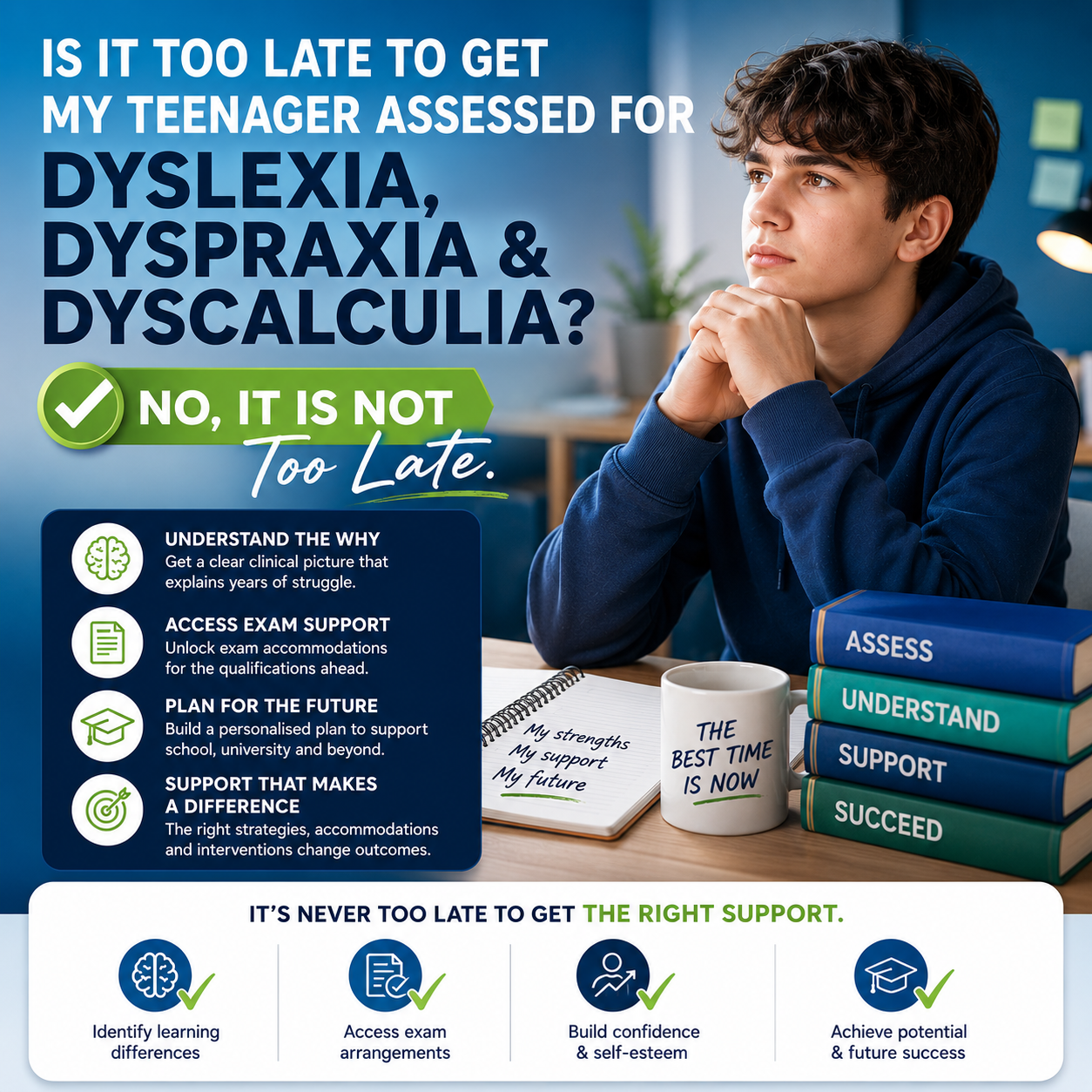
The teenage years bring greater academic pressure, increasing independence, and new social challenges—often revealing hidden learning difficulties. A student who coped in primary school may suddenly struggle with reading-heavy subjects, disorganization, or an overwhelming workload. Dyslexia, ADHD, autism, and processing disorders don’t disappear in adolescence;...