
23 May Er of seint að láta meta unglinginn minn fyrir lesblindu, lesblindu og reikniþröskuldi?
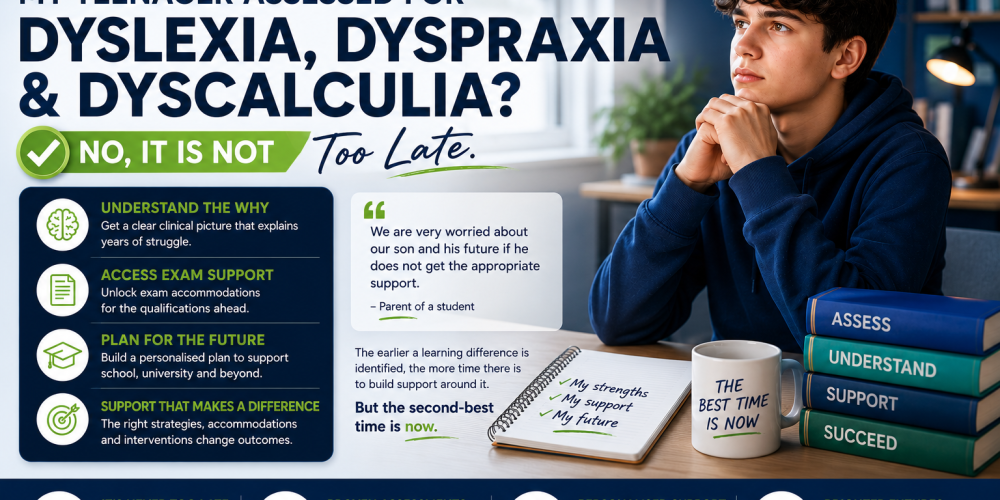
Nei, það er ekki of seint. Sálfræðilegt námsmat sem framkvæmt er á framhaldsskólaárunum skilar enn marktækum árangri fyrir nemandann: klínísk mynd sem útskýrir áralanga vinnu, gögn sem opna fyrir aðgang að prófum fyrir komandi hæfni og áætlun sem styður nemandann í gegnum eftirstandandi skólaár og áfram inn í háskóla og fullorðinslíf. Því fyrr sem námsmunur er greindur, því meiri tími er til að byggja upp stuðning í kringum hann. En næstbesti tíminn er núna.
Foreldri sem hafði nýlega samband við Global Education Testing skrifaði: „Ég tel að sonur minn sé með dyspraxíu, lesblindu og hugsanlega reiknirit. Ég hef aldrei leitað neinna úrræða fyrr en nú þar sem hann virtist ráða við þetta ágætlega, en eftir því sem álagið fyrir prófin eykst er hann að dragast enn frekar aftur úr. Ég væri að gera honum óþjónun með því að láta hann ekki fá viðeigandi mat og greiningu. Við höfum miklar áhyggjur af syni okkar og framtíð hans ef hann fær ekki viðeigandi stuðning.“
Þetta er eitt algengasta samtalið sem Global Education Testing á við foreldra unglingsstúdenta.
Ungi einstaklingurinn hefur bætt upp fyrir það með hugrænni hæfni, vinnusemi og stuðningsfjölskyldu í mörg ár. Þessi bætur virkuðu í gegnum grunnskóla og framhaldsskóla en hættu að lokum að virka þegar kröfur um GCSE, IGCSE, IB Middle Years eða A Level fara virkilega að gilda.
Barnið sem átti erfitt uppdráttar á nú greinilega í erfiðleikum og fjölskyldan veltir fyrir sér hvort þau hefðu átt að bregðast við fyrr.
Af hverju eru björt börn oft gleymd þangað til prófþrýstingurinn byrjar
Nemandi með lesblindu, dyspraxíu, dyscalculíu, ADHD eða einhverja samsetningu þessara, sem einnig hefur sterka hugræna getu, getur dulið undirliggjandi námsmun í mörg ár. Dulræningin er ómeðvituð og þreytandi. Einstaklingurinn bætir upp með því að vinna tvöfalt meira en bekkjarfélagar hans sem virðast eiga auðveldara með að vinna sama starf.
Að fela námsefnið virkar í grunnskóla því að námskröfurnar eru enn viðráðanlegar. Það virkar oft í byrjun framhaldsskóla því fagkennarar eru enn að leggja mikið upp úr námsefninu. Bæturnar byrja að bregðast í aðdraganda GCSE, IGCSE, IB MYP, A Level, IB Diploma, SAT eða AP prófanna því kröfurnar breytast á ákveðna vegu sem bjartsýna barnið getur ekki bætt upp fyrir.
Lestrarálagið eykst umfram hraði munnlegrar leiðréttingar. Skrifleg afköst eru krafist í magni og gæðum sem barn með dyspraxíu eða dygrafíu getur ekki jafnað með því að leggja meira á sig. Stærðfræðileg rökfærsla við tímasett próf afhjúpar dyscalculíu á þann hátt sem heimavinna með reiknivél gerði aldrei.
Mörg námsefni sem eru tekin samtímis fara fram úr vinnsluminni barns með ADHD eða framkvæmdastjórnarerfiðleika. Kröfur um sjálfstætt nám í framhaldsskóla afhjúpa veikleika í skipulagningu, áætlanagerð og tímastjórnun sem foreldrar, kennarar og styttri verkefni höfðu áður tekið á sig.
Nemandinn sem átti erfitt uppdráttar er skyndilega að drukkna. Foreldrarnir, þegar þeir líta til baka, átta sig oft á að merkin voru til staðar í mörg ár. Sektarkenndin er raunveruleg og skiljanleg. En rétta viðbrögðin eru ekki að dvelja við missin ár. Rétta viðbrögðin eru að meta núna, greina hvað er í raun að gerast og veita réttan stuðning fyrir komandi ár.
Hvað ítarlegt mat leiðir í ljós hjá unglingi sem hefur verið að takast á við erfiðleika
Ítarlegt sálfræðilegt mat á unglingi gefur af sér ákveðna klíníska mynd, því árin sem hann hefur stundað sem dulargervi og bætur skilja eftir sig spor sem matið getur lesið.
Hugræna hæfnigreiningin (WISC-V fyrir nemendur yngri en 18 ára, WAIS fyrir nemendur 18 ára og eldri) mælir undirliggjandi hæfni sem knýr greiðsluna áfram. Unglingur sem hefur munnlegan skilning og fljótandi rökhugsun í meðallagi eða yfirburðum, en vinnsluhraða og vinnsluminni er mun lægra, sýnir fram á árabil óstöðugra námsárangurs.
Sami unglingur sem hefur töluvert lægri lesskilning en munnleg túlkun á WIAT-III prófinu sýnir greinilega lesblindu, jafnvel þótt nákvæmni í lestri sé innan marka.
Mælingar á handriti og hreyfisamhæfingu greina undirskriftir með dyspraxíu og dysgrafíu, sérstaklega hvað varðar hraða og læsileika í lengri ritunartíma við takmarkaðar aðstæður.
Stærðfræðilegu mælingarnar gera greinarmun á raunverulegri dyscalculíu (sértækum erfiðleikum með talnaskilning, stærðfræðilegri rökfærslu og stærðfræðilegri úrvinnslu) og vanframmistöðu í stærðfræði sem orsakast af öðrum þáttum eins og kvíða, göllum í kennslu eða veikleika í vinnsluminni.
Athyglismælingarnar (Conners Self-Report, MOXO Continuous Performance Test, SNAP-IV 26) fanga ADHD snið sem oft koma fyrir samhliða lesblindu, dyspraxíu og dyscalculíu og sem hafa oft verið falin af sömu uppbótaraðferðum og barnið hefur notað við aðra erfiðleika.
Mælingar á tilfinningalegri virkni (Rotter Incomplete Sentences for Adolescents) sýna velferðarkostnaðinn sem fylgir áralangri bætur. Bjart barn sem hefur verið að dylja námsmun mætir oft í mat með aukinn kvíða, fullkomnunaráráttu, lága sjálfsmynd í námi og þreytu. Matið sýnir þetta ásamt hugrænni og námslegri mynd.
Samþætta prófílinn gefur fjölskyldunni, skólanum og prófnefndum heildstæða klíníska skilning á því hvað barnið hefur verið að takast á við og hvaða stuðningur mun hjálpa.
Hvað skjölunin opnar fyrir próf og háskólanám
Ítarlegt sálfræðilegt mat sem framkvæmt er á framhaldsskólaárunum er skjalið sem opnar fyrir aðgang að prófum fyrir þá prófgráðu sem enn eru framundan.
Fyrir GCSE, IGCSE og A-stig próf sem tekin eru í gegnum Pearson Edexcel eða aðra prófnefnd sem er viðurkennd af JCQ, styður skýrslan aðgangsúrræði að JCQ, þar á meðal eyðublað 8 þar sem þess er krafist. Meðal þeirra úrræða sem í boði eru eru lengri tími í prófum (almennt 25 prósent, með 50 eða 100 prósent í boði þar sem greiningarsniðið styður það), hvíldarhlé undir eftirliti, aðskilið prófherbergi, notkun ritvinnsluforrits, lestækis, skrifara, breytt prófsnið og leiðbeinandi fyrir nemendur með einbeitingarörðugleika.
Fyrir Cambridge IGCSE og Cambridge International A Level prófin uppfyllir skýrslan sérstakar kröfur Cambridge International um sönnunargögn (staðalstig 84 eða lægra, hundraðshluti 15 eða lægra, eða kvarðstig 6 eða lægra, með nefndum undirprófum og núverandi dagsetningum).
Fyrir IB-diplómanámið uppfyllir skýrslan skilyrði IB Inclusive Access Arrangements, með skjölun sem byggir á DSM-5-TR eða ICD-11 og ráðleggingum tengdum niðurstöðum greiningarinnar.
Fyrir SAT, ACT og Advanced Placement prófin styður skýrslan aðlögun háskólaráðs í gegnum þjónustu fyrir nemendur með fötlun.
Fyrir háskólaumsóknir styður skýrslan UCAS-umsóknir og námsstuðningsþjónustu háskóla í Bretlandi, Bandaríkjunum, Spáni, Hollandi, Sameinuðu arabísku furstadæmunum og öðrum alþjóðlegum stöðum, ásamt umsóknum um námsstyrki til fatlaðra nemenda fyrir breska nemendur.
Fyrir framhaldspróf, þar á meðal MCAT, LSAT, GMAT og GRE, styður sama skýrsla umsóknir um aðlögun fyrir nemendur sem halda áfram starfsnámi.
Mun skólinn samþykkja utanaðkomandi skjöl um miðja framhaldsskólagöngu
Já. Alþjóðlegir skólar, breskir skólar og flestir innlendir skólar samþykkja utanaðkomandi sálfræðilega námsgögn sem sjálfsagðan hlut.
Námsstuðningsteymi skólans og sérkennslustjóri nota skýrsluna til að skipuleggja stuðning í kennslustofu, prófstjóri notar skýrsluna til að sækja um aðgangsúrræði og stuðningsteymið notar skýrsluna til að skilja og styðja við velferð nemandans.
Í mörgum tilfellum hvetja skólar fjölskyldur virkan til að panta utanaðkomandi gögn þegar skólar hafa ekki efni á eigin fjármunum eða þegar greiningarmyndin er flóknari en innri getu skólans ræður við. Skólinn framleiðir ekki greiningargögnin sjálfur vegna þess að prófnefndirnar krefjast sérstaklega sjálfstæðis frá skólanum. Skólinn vinnur með það sem fjölskyldan hefur með sér.
Hvað á að segja unglingi sem hefur tafist í mati
Margir foreldrar í þessari stöðu hafa áhyggjur af því hvernig eigi að tala við barn sitt um seinkað námsmat. Raunin er sú að flestir unglingar sem hafa verið að dylja námsmun í mörg ár eru léttir þegar matið fer loksins fram og erfiðleikar þeirra eru útskýrðir með einhverju raunverulegu og nafngreindu.
Unglingur sem hefur glímt við erfiðleika í mörg ár verður oft sterkasti talsmaður matsferlisins þegar hann skilur hvað það er og hvað það gerir.
Margir lýsa greiningarstundinni sem fyrsta skipti sem erfiðleikarnir í skólanum áttu sér stað.
Hvernig alþjóðleg prófun í menntun meðhöndlar mat á síðari stigum
Global Education Testing hefur hjálpað mörgum fjölskyldum að takast á við þá stund þegar unglingur, sem áður hefur tekist á við próf, byrjar að glíma greinilega við prófþrýsting. Hið ítarlega sálfræðilega námsmat er framkvæmt af skráðum menntasálfræðingum hjá HCPC og ferlið tekur 21 dag frá fyrstu fyrirspurn til afhendingar skriflegrar skýrslu.
Í matinu er skoðað hugræna getu, vinnsluminni, vinnsluhraða, námsárangur í lestri, stafsetningu, rituðu máli og stærðfræði, athyglisstjórnun, framkvæmdastarfsemi, tilfinningalega líðan, hegðunar- og félagslega virkni og námsmun á öllu klíníska sviðinu, þar á meðal lesblindu, dyspraxíu, reikningsdrögum, lestrarröskun, ADHD, kvíða og einhverfurófsmynstur. DISCO-viðtalið styður greiningu einhverfu þar sem það á við.
Greiningarskýrslan er byggð á DSM-5-TR og ICD-11 viðmiðunum, rituð á ensku og skipulögð til að uppfylla kröfur JCQ, Cambridge International, IB, College Board og námsstuðningsþjónustu háskólans í einu skjali.
Næstu skref
Fjölskyldur sem íhuga mat á síðari stigum geta haft samband við Global Education Testing í gegnum tilvísunarform fjölskyldunnar.

Alexander Bentley-Sutherland er forstjóri Global Education Testing, leiðandi veitandi námsþróunarprófa sem eru sérsniðin sérstaklega fyrir alþjóða- og einkaskólasamfélagið um allan heim.
- Alexander Bentley-Sutherland
- Alexander Bentley-Sutherland
- Alexander Bentley-Sutherland
- Alexander Bentley-Sutherland
- Alexander Bentley-Sutherland
- Alexander Bentley-Sutherland
- Alexander Bentley-Sutherland
- Alexander Bentley-Sutherland
- Alexander Bentley-Sutherland
- Alexander Bentley-Sutherland
- Alexander Bentley-Sutherland
- Alexander Bentley-Sutherland
- Alexander Bentley-Sutherland
- Alexander Bentley-Sutherland
- Alexander Bentley-Sutherland
- Alexander Bentley-Sutherland
- Alexander Bentley-Sutherland
- Alexander Bentley-Sutherland
- Alexander Bentley-Sutherland
- Alexander Bentley-Sutherland
- Alexander Bentley-Sutherland
- Alexander Bentley-Sutherland
- Alexander Bentley-Sutherland
- Alexander Bentley-Sutherland
- Alexander Bentley-Sutherland
- Alexander Bentley-Sutherland
- Alexander Bentley-Sutherland
- Alexander Bentley-Sutherland
- Alexander Bentley-Sutherland
- Alexander Bentley-Sutherland
- Alexander Bentley-Sutherland
- Alexander Bentley-Sutherland
- Alexander Bentley-Sutherland
- Alexander Bentley-Sutherland
- Alexander Bentley-Sutherland
- Alexander Bentley-Sutherland
- Alexander Bentley-Sutherland
- Alexander Bentley-Sutherland
- Alexander Bentley-Sutherland
- Alexander Bentley-Sutherland
- Alexander Bentley-Sutherland
- Alexander Bentley-Sutherland
- Alexander Bentley-Sutherland
- Alexander Bentley-Sutherland
- Alexander Bentley-Sutherland
- Alexander Bentley-Sutherland
- Alexander Bentley-Sutherland
- Alexander Bentley-Sutherland
- Alexander Bentley-Sutherland
- Alexander Bentley-Sutherland
- Alexander Bentley-Sutherland
- Alexander Bentley-Sutherland
- Alexander Bentley-Sutherland
- Alexander Bentley-Sutherland
- Alexander Bentley-Sutherland
- Alexander Bentley-Sutherland
- Alexander Bentley-Sutherland
- Alexander Bentley-Sutherland
- Alexander Bentley-Sutherland
- Alexander Bentley-Sutherland
- Alexander Bentley-Sutherland
- Alexander Bentley-Sutherland
- Alexander Bentley-Sutherland
- Alexander Bentley-Sutherland
- Alexander Bentley-Sutherland
- Alexander Bentley-Sutherland
- Alexander Bentley-Sutherland
- Alexander Bentley-Sutherland
- Alexander Bentley-Sutherland
- Alexander Bentley-Sutherland
- Alexander Bentley-Sutherland
- Alexander Bentley-Sutherland
- Alexander Bentley-Sutherland
- Alexander Bentley-Sutherland
- Alexander Bentley-Sutherland
- Alexander Bentley-Sutherland
- Alexander Bentley-Sutherland
- Alexander Bentley-Sutherland
- Alexander Bentley-Sutherland
- Alexander Bentley-Sutherland
- Alexander Bentley-Sutherland
- Alexander Bentley-Sutherland
- Alexander Bentley-Sutherland
- Alexander Bentley-Sutherland
- Alexander Bentley-Sutherland
- Alexander Bentley-Sutherland
- Alexander Bentley-Sutherland
- Alexander Bentley-Sutherland
- Alexander Bentley-Sutherland
- Alexander Bentley-Sutherland
- Alexander Bentley-Sutherland
- Alexander Bentley-Sutherland
- Alexander Bentley-Sutherland
- Alexander Bentley-Sutherland
- Alexander Bentley-Sutherland
- Alexander Bentley-Sutherland
- Alexander Bentley-Sutherland
- Alexander Bentley-Sutherland
- Alexander Bentley-Sutherland
- Alexander Bentley-Sutherland
- Alexander Bentley-Sutherland
- Alexander Bentley-Sutherland
- Alexander Bentley-Sutherland
- Alexander Bentley-Sutherland
- Alexander Bentley-Sutherland
- Alexander Bentley-Sutherland
- Alexander Bentley-Sutherland
- Alexander Bentley-Sutherland
- Alexander Bentley-Sutherland
- Alexander Bentley-Sutherland
- Alexander Bentley-Sutherland
- Alexander Bentley-Sutherland
- Alexander Bentley-Sutherland
- Alexander Bentley-Sutherland
- Alexander Bentley-Sutherland
- Alexander Bentley-Sutherland
- Alexander Bentley-Sutherland
- Alexander Bentley-Sutherland
- Alexander Bentley-Sutherland
- Alexander Bentley-Sutherland
- Alexander Bentley-Sutherland
- Alexander Bentley-Sutherland
- Alexander Bentley-Sutherland
- Alexander Bentley-Sutherland
- Alexander Bentley-Sutherland
- Alexander Bentley-Sutherland
- Alexander Bentley-Sutherland
- Alexander Bentley-Sutherland
- Alexander Bentley-Sutherland
- Alexander Bentley-Sutherland
- Alexander Bentley-Sutherland
- Alexander Bentley-Sutherland
- Alexander Bentley-Sutherland
- Alexander Bentley-Sutherland
- Alexander Bentley-Sutherland
- Alexander Bentley-Sutherland
- Alexander Bentley-Sutherland
- Alexander Bentley-Sutherland
- Alexander Bentley-Sutherland
- Alexander Bentley-Sutherland
- Alexander Bentley-Sutherland
- Alexander Bentley-Sutherland
- Alexander Bentley-Sutherland
- Alexander Bentley-Sutherland
- Alexander Bentley-Sutherland
- Alexander Bentley-Sutherland
- Alexander Bentley-Sutherland
- Alexander Bentley-Sutherland
- Alexander Bentley-Sutherland
- Alexander Bentley-Sutherland
- Alexander Bentley-Sutherland
- Alexander Bentley-Sutherland
- Alexander Bentley-Sutherland
- Alexander Bentley-Sutherland
- Alexander Bentley-Sutherland
- Alexander Bentley-Sutherland
- Alexander Bentley-Sutherland
- Alexander Bentley-Sutherland
- Alexander Bentley-Sutherland
- Alexander Bentley-Sutherland
- Alexander Bentley-Sutherland
- Alexander Bentley-Sutherland
- Alexander Bentley-Sutherland
- Alexander Bentley-Sutherland
- Alexander Bentley-Sutherland
- Alexander Bentley-Sutherland
- Alexander Bentley-Sutherland
- Alexander Bentley-Sutherland
- Alexander Bentley-Sutherland
- Alexander Bentley-Sutherland
- Alexander Bentley-Sutherland
- Alexander Bentley-Sutherland
- Alexander Bentley-Sutherland
- Alexander Bentley-Sutherland
- Alexander Bentley-Sutherland
- Alexander Bentley-Sutherland
- Alexander Bentley-Sutherland
- Alexander Bentley-Sutherland
- Alexander Bentley-Sutherland
- Alexander Bentley-Sutherland
- Alexander Bentley-Sutherland
- Alexander Bentley-Sutherland
- Alexander Bentley-Sutherland
- Alexander Bentley-Sutherland
- Alexander Bentley-Sutherland
- Alexander Bentley-Sutherland
- Alexander Bentley-Sutherland
- Alexander Bentley-Sutherland
- Alexander Bentley-Sutherland
- Alexander Bentley-Sutherland
- Alexander Bentley-Sutherland
- Alexander Bentley-Sutherland
- Alexander Bentley-Sutherland
- Alexander Bentley-Sutherland
- Alexander Bentley-Sutherland
- Alexander Bentley-Sutherland
- Alexander Bentley-Sutherland
- Alexander Bentley-Sutherland
- Alexander Bentley-Sutherland
- Alexander Bentley-Sutherland
- Alexander Bentley-Sutherland
- Alexander Bentley-Sutherland
- Alexander Bentley-Sutherland
- Alexander Bentley-Sutherland
- Alexander Bentley-Sutherland
- Alexander Bentley-Sutherland
- Alexander Bentley-Sutherland
- Alexander Bentley-Sutherland
- Alexander Bentley-Sutherland
- Alexander Bentley-Sutherland
- Alexander Bentley-Sutherland
- Alexander Bentley-Sutherland
- Alexander Bentley-Sutherland
- Alexander Bentley-Sutherland
- Alexander Bentley-Sutherland
- Alexander Bentley-Sutherland
- Alexander Bentley-Sutherland
- Alexander Bentley-Sutherland
- Alexander Bentley-Sutherland
- Alexander Bentley-Sutherland
- Alexander Bentley-Sutherland
- Alexander Bentley-Sutherland
- Alexander Bentley-Sutherland
- Alexander Bentley-Sutherland
- Alexander Bentley-Sutherland
- Alexander Bentley-Sutherland
- Alexander Bentley-Sutherland
- Alexander Bentley-Sutherland
- Alexander Bentley-Sutherland
- Alexander Bentley-Sutherland
- Alexander Bentley-Sutherland
- Alexander Bentley-Sutherland
- Alexander Bentley-Sutherland
- Alexander Bentley-Sutherland
- Alexander Bentley-Sutherland
- Alexander Bentley-Sutherland
- Alexander Bentley-Sutherland
- Alexander Bentley-Sutherland
- Alexander Bentley-Sutherland
- Alexander Bentley-Sutherland
- Alexander Bentley-Sutherland
- Alexander Bentley-Sutherland
- Alexander Bentley-Sutherland
- Alexander Bentley-Sutherland
- Alexander Bentley-Sutherland
- Alexander Bentley-Sutherland
- Alexander Bentley-Sutherland
- Alexander Bentley-Sutherland
- Alexander Bentley-Sutherland
- Alexander Bentley-Sutherland
- Alexander Bentley-Sutherland
- Alexander Bentley-Sutherland
- Alexander Bentley-Sutherland
- Alexander Bentley-Sutherland
- Alexander Bentley-Sutherland
- Alexander Bentley-Sutherland
- Alexander Bentley-Sutherland
- Alexander Bentley-Sutherland
- Alexander Bentley-Sutherland
- Alexander Bentley-Sutherland
- Alexander Bentley-Sutherland
- Alexander Bentley-Sutherland
- Alexander Bentley-Sutherland
- Alexander Bentley-Sutherland
- Alexander Bentley-Sutherland
- Alexander Bentley-Sutherland
- Alexander Bentley-Sutherland
- Alexander Bentley-Sutherland
- Alexander Bentley-Sutherland
- Alexander Bentley-Sutherland
- Alexander Bentley-Sutherland
- Alexander Bentley-Sutherland
- Alexander Bentley-Sutherland
- Alexander Bentley-Sutherland
- Alexander Bentley-Sutherland
- Alexander Bentley-Sutherland
- Alexander Bentley-Sutherland
- Alexander Bentley-Sutherland
- Alexander Bentley-Sutherland
- Alexander Bentley-Sutherland
- Alexander Bentley-Sutherland
- Alexander Bentley-Sutherland
- Alexander Bentley-Sutherland
- Alexander Bentley-Sutherland
- Alexander Bentley-Sutherland
- Alexander Bentley-Sutherland